If your home or business has suffered fire damage, you’re likely facing more than just the immediate shock—you’re now dealing with the complex process of filing a fire damage claim. You might be wondering, “How long will it take for my insurance to pay?
Am I getting the full settlement I deserve? ” Navigating insurance claims after a fire can feel overwhelming, especially when timelines, documentation, and policy details come into play. But understanding what to expect and how to protect your rights can make all the difference in securing a fair settlement.
Keep reading to learn exactly what you need to know to handle your fire damage claim with confidence and get the compensation you deserve.
Fire Damage Claim Basics
Fire damage claims cover many types of losses. These include damage to your home structure, personal belongings, and sometimes living expenses if you cannot stay in your house. Common types of fire damage covered are smoke damage, fire damage itself, and water damage from firefighting efforts.
Some things insurance policies often exclude. These are damage from arson if you are suspected, intentional damage, and sometimes wear and tear. Also, damage to items stored outside or caused by pets is usually not covered.
| Required Documentation | Purpose |
|---|---|
| Photos of damage | Show the extent of fire and smoke damage |
| Insurance policy copy | Confirm coverage details |
| Repair estimates | Provide cost of fixing damages |
| Proof of ownership | Verify personal belongings |
| Fire report | Official cause and details of fire |
Filing Your Fire Damage Claim
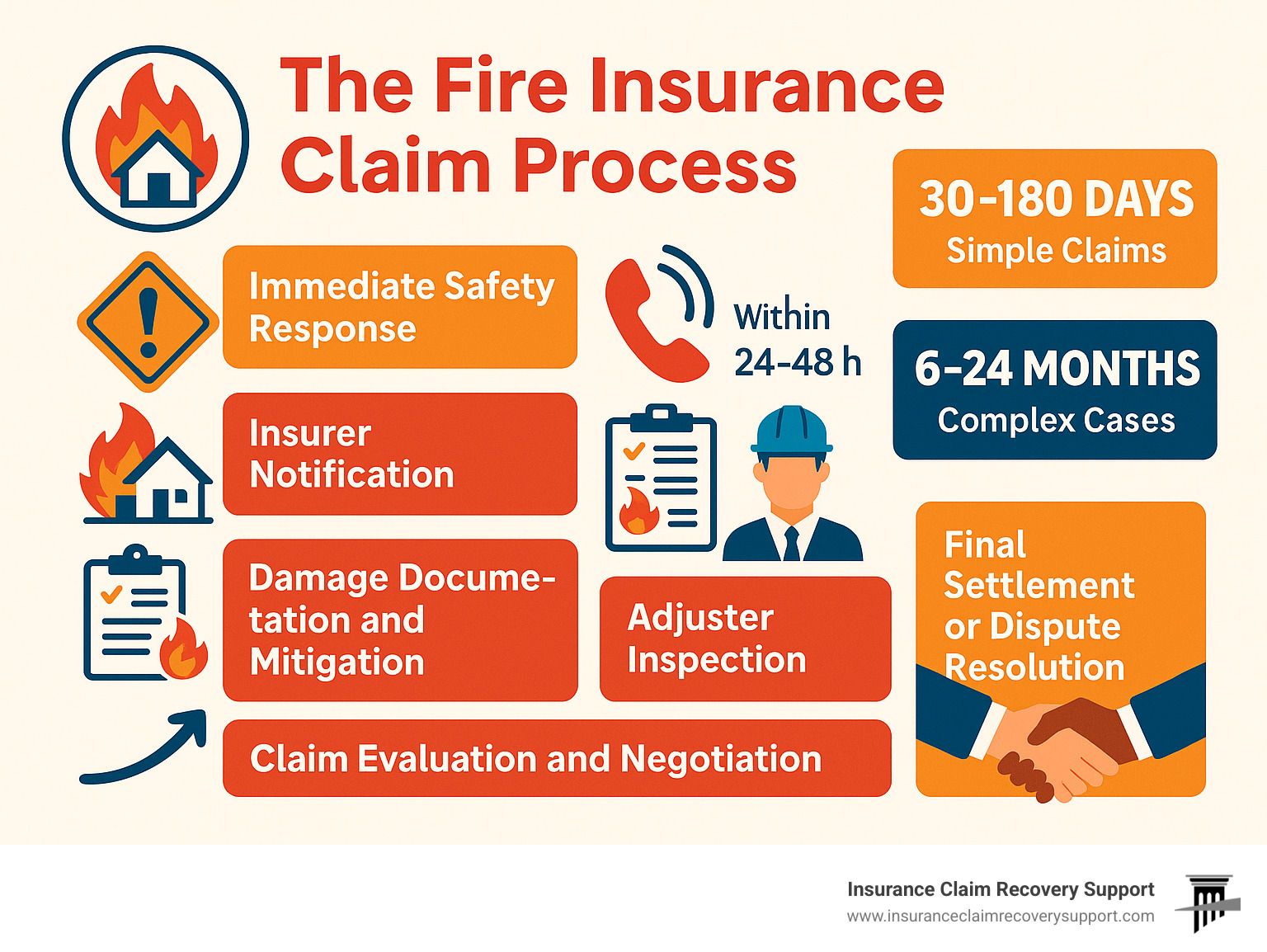
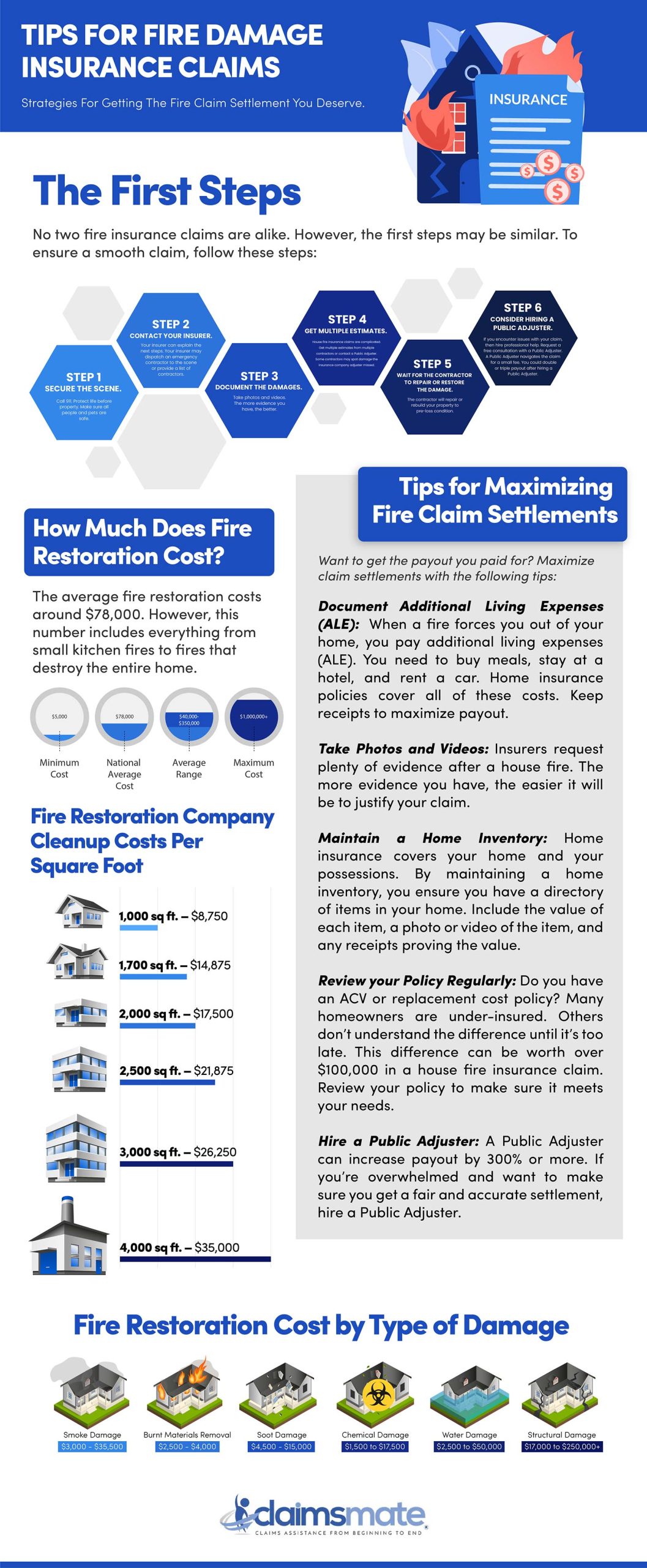
After fire damage, take quick action. Contact your insurance company immediately. Provide details about the fire and damages. This starts the claim process.
Each insurance policy has specific timelines for filing claims. Usually, claims must be filed within 30 days of the fire. Check your policy to know the exact deadline.
Document all damage by taking photos and videos. Keep receipts for any repairs or expenses. This helps support your claim.
Notify your insurer in writing. Include the date, time, and cause of the fire, if known. Be honest and clear when explaining the situation.
| Step | Action |
|---|---|
| 1 | Contact insurance company |
| 2 | File claim within policy time limit |
| 3 | Document damage with photos and receipts |
| 4 | Submit written notice to insurer |
Claim Processing Timeline
State laws set deadlines for insurance companies to pay fire damage claims. For example, Alabama requires payment within 30 days, Arkansas within 10 days, and California within 30 days. These timelines start after the claim is accepted.
Several factors can delay claim processing. Missing paperwork, unclear damage reports, or disputes about coverage slow things down. The more complete and clear your documents, the faster the process.
You can track your claim status by contacting your insurance agent or using online portals. Keep a record of all communications. This helps you stay updated and avoid delays.
Maximizing Your Settlement
Document every damage by taking clear photos and videos. Include all affected areas. Keep a detailed list of destroyed or damaged items. This record helps prove your loss and supports your claim.
Get repair and replacement estimates from licensed contractors. Compare multiple quotes to ensure accuracy. Accurate costs help you receive a fair settlement amount.
Consider hiring a public adjuster. They work for you, not the insurance company. Public adjusters understand claims and can negotiate better settlements. Their fees come from the settlement, so no upfront cost is needed.
Common Claim Denial Reasons
Insufficient coverage often causes claim denials. Some policies exclude fire damage from certain sources. Always check your policy details before filing.
Late filing can lead to rejection. Most insurers require claims within a short time after the fire. Missing deadlines or incomplete paperwork delays the process and may cause denial.
Suspected fraud is a serious reason for denial. False statements or hiding facts hurt your claim. Insurance companies investigate claims carefully to avoid paying fraudulent claims.
| Reason | Explanation |
|---|---|
| Insufficient Coverage and Exclusions | Policy limits or exclusions can block claims for certain fire damages. |
| Late Filing and Documentation Issues | Claims must be filed quickly with proper documents to avoid denial. |
| Suspected Fraud and Misrepresentation | False information or hiding facts leads to claim rejection. |
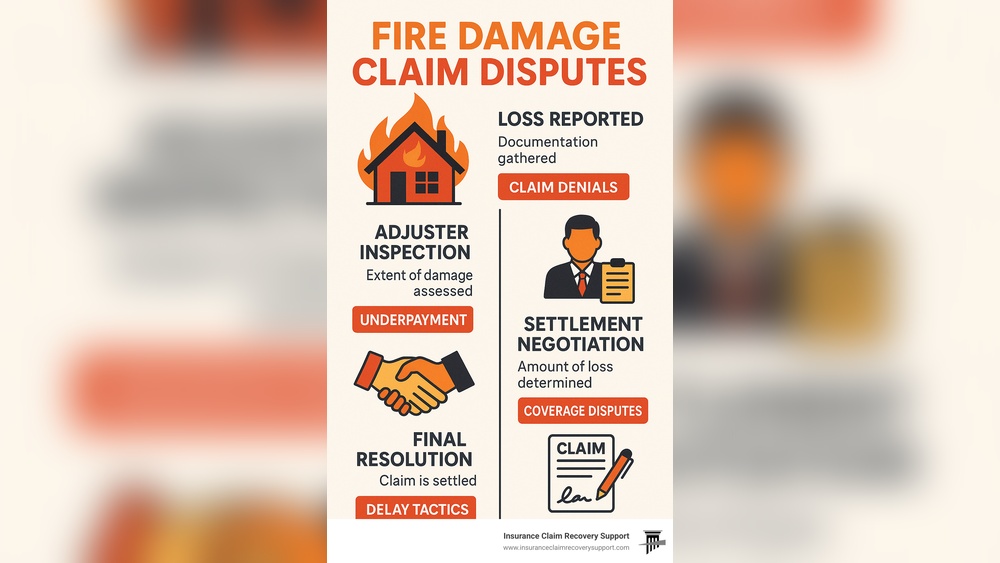
Dealing With Claim Denials
Appealing a denied claim starts with reviewing the denial letter carefully. This letter explains why the insurer rejected the claim. Gathering additional evidence can help prove the damage and support your case. Collect photos, repair estimates, and witness statements to strengthen your appeal.
Filing a formal appeal involves submitting a written request to the insurance company. Keep copies of all documents and send them by certified mail. This creates a paper trail for your records.
Consulting an attorney might be necessary if the insurer keeps denying your claim. A lawyer can review your policy and help you understand your rights. Legal advice is crucial if the claim amount is large or the case is complex.
Tips For Effective Communication
Be clear and honest when talking to your insurance adjuster. Give all facts calmly. Avoid guessing or exaggerating your losses. Keep records of every conversation and document you share.
Do not admit fault or make promises. Only share what you know. Ask for explanations if any terms or processes seem confusing.
Avoid common mistakes like delaying your claim or missing deadlines. Submit all necessary documents promptly. Stay organized by keeping copies of each form and receipt.
Request advance payments if you need immediate funds for repairs or living expenses. Explain your urgent needs clearly. Advance payments can help ease financial stress while your claim is processed.
Legal Considerations In Texas
Texas law protects homeowners after fire damage. Insurance companies must follow strict rules to settle claims fairly. The Texas Department of Insurance requires insurers to pay the full amount for total loss of covered property.
Claimants have rights, including the right to timely payments. Insurers usually have a set time to pay after claim approval. Filing claims on time with proper documents helps avoid denial.
| Resource | Purpose | Contact |
|---|---|---|
| Texas Department of Insurance | Guides on fire claim rules and consumer rights | tdi.texas.gov |
| Local Fire Marshal | Fire safety inspections and reports | Contact city office |
| Legal Aid Services | Help with claim disputes and legal advice | Call local legal aid |
Frequently Asked Questions
How Long Does It Take For Insurance To Pay After A Fire?
Insurance typically pays fire claims within 10 to 30 days after claim approval, depending on state laws and policy terms. Prompt documentation and communication speed up the process. Delays may occur if investigations or additional reviews are required.
What Are The Top 3 Claim Settlement Ratios?
The top 3 claim settlement ratios are from companies with ratios above 95%. Examples include New India Assurance, National Insurance, and Oriental Insurance. High ratios indicate reliable claim settlements and customer satisfaction.
What Are Common Reasons Fire Claims Get Denied?
Common reasons fire claims get denied include insufficient coverage, late filing, lack of documentation, policy exclusions, suspected fraud, pre-existing damage, and misrepresentation. Fire safety violations and unpaid premiums also lead to denials. Always review your policy and file claims promptly with accurate information.
What Not To Say During A Home Insurance Claim?
Avoid admitting fault or exaggerating damages during a home insurance claim. Do not lie, guess, or provide incomplete information. Refrain from discussing unrelated issues or accepting early settlement offers without review. Stay factual and concise to ensure a smooth claims process.
Conclusion
Settling a fire damage claim can feel overwhelming and complex. Stay organized and keep clear records of all damage and communication. Understand your policy details to avoid surprises during settlement. Act quickly to meet deadlines set by your insurer. Don’t hesitate to ask questions if something is unclear.
Fair compensation helps rebuild your home and peace of mind. Take time to review offers carefully before agreeing. Your patience and persistence can lead to a better outcome. Fire damage claims require attention, but you can handle them step-by-step.
Read More
- Claim Bridge Settlement Support: Expert Tips to Maximize Your Claim
- Insurance Claim Review Service: Maximize Your Settlement Today
- Property Damage Claim Estimate: Maximize Your Compensation Today
- Fast Accident Claim Assistance: Get Quick, Stress-Free Help Today
- Claim Settlement Strategy Guide: Expert Tips for Fast Approval
- Insurance Litigation Attorney Help: Win Your Claim with Expert Guidance
- Settlement Counsel Case Review: Expert Insights for Winning Results
- Claim Lawyer Consultation Online: Expert Advice at Your Fingertips
- Claim Dispute Legal Support: Expert Help for Winning Cases
- Long Term Care Injury Claim: Maximize Your Compensation Now